
Traveling to Japan and staying connected is easier than ever with eSIMs.It allows you to activate a local data plan instantly without having to physically swap your home country's SIM card.Choosing the perfect Japanese eSIM shouldn't be complicated, yet finding the right balance of value and performance can be challenging.This guide cuts through the noise, offering an objective review of the top data plans available today. I dive deep into critical comparison points: analyzing which providers offer the best data bundles, clear pricing structures, and, importantly, which ones support the ability to share your mobile internet via tethering. Stop paying unnecessary roaming charges and start enjoying secure and instant connectivity across Japan's major cellular networks. Your hassle-free journey starts here.
Why Choose an eSIM for Traveling in Japan?
Choosing an eSIM for traveling in Japan is beneficial because it offers convenience, cost savings, and flexibility without the need for a physical SIM card. You can activate a plan instantly upon arrival, often by scanning a QR code, which avoids wasting time at the airport or searching for a shop. An eSIM also allows you to keep your home SIM active for calls while using local data, avoids the risk of losing a physical card, and can be cheaper than international roaming.

🔻 Key Advantages of Using an eSIM:
-
Instant activation: You can get online immediately after landing by purchasing and activating a digital plan, often before your flight, so you don't need to rely on public Wi-Fi or find a physical SIM card.
-
Cost savings: Using an eSIM can prevent high international roaming charges from your home carrier.
-
Convenience and flexibility: You don't need to obtain, carry, or swap a physical SIM card, reducing the risk of losing it. You can often keep your home number active on the same device for calls and texts while using the eSIM for local data.
-
Multiple plans: You can store multiple eSIMs and switch between them in your device's settings, which is useful if you travel frequently to the same places.
-
Data sharing: Many eSIMs for Japan allow you to share your data with other devices, such as a laptop or a tablet, through a hotspot connection.
- Safer: No risk of losing a physical SIM during travel.
Key Factors to Consider When Choosing an eSIM
When picking an eSIM for traveling in Japan, think about these factors:
|
Factor |
Why It Matters |
|
Data Usage |
How much data will you need? Just for maps and messaging, or will you stream / hotspot?
|
|
Trip Length |
The number of days (or nights) affects which plan makes sense (fixed data vs unlimited).Match the plan's validity (e.g., 7, 15, 30 days) to the length of your stay. It's often better to have a little extra than to run out.If it’s a short trip (a week or less), look for short-duration plans. For longer stays (2–4 weeks), 30-day plans or unlimited options might be better. |
|
Network Coverage |
Japan has three major mobile networks: NTT Docomo, KDDI (au), and SoftBank. Docomo has the widest nationwide coverage (especially in rural areas), while KDDI and SoftBank are also very reliable in cities. Most third-party eSIM providers (like Airalo and Holafly) utilize one of these two underlying networks. |
|
Speed (4G / 5G) |
Do you need high-speed data (for video calls, work) or are you OK with moderate speeds? Some plans offer 5G, others only 4G. |
|
Fair-Use or Throttling Policy |
Even “unlimited” plans may slow down after a daily high-speed cap. |
|
Hotspot Support |
If you plan to use your phone to share data (e.g., for a laptop), make sure the eSIM supports hotspot / tethering. |
|
Ease of Activation / Installation |
Can you install before arrival?Is there a QR code?Is there an app?Does the activation start when you land or when you scan the code? |
|
Support |
Do they provide English customer service? How do you top up data if needed? |
|
Price |
Compare cost per GB, or cost per day, depending on usage and length of stay.Sometimes, paying a little more for a reliable provider is better than choosing the cheapest, unknown option. |
Top eSIM Providers for Japan Travel
Here are some of the top eSIM providers for Japan travelers, along with their strengths and trade-offs:
|
Provider |
Network Used |
Typical Pricing (Example) |
Key Feature & Notes |
Best For |
|
NTT Docomo / KDDI (au) |
$17 for 10GB/30 days |
Broad range of plans (data-only, regional/global options). Supports hotspot sharing. |
Travelers who want a balance of reliability, speed, and cost. |
|
|
KDDI (au) / Softbank |
$18.55 for 10GB/30 days |
Excellent coverage and reliability. Very popular, intuitive app in many languages. |
First-time eSIM users and those who travel frequently. |
|
|
KDDI (au) / Softbank |
$74.90 for unlimited data/30 days |
Popular for truly unlimited data plans, but note that Fair Usage Policy (FUP) may apply (speed throttling after a certain daily threshold). |
Travelers who don't want to worry about data limits. |
|
|
NTT Docomo / KDDI (au) |
$17.99 for 10GB/30 days |
Affordable plans, backed by NordVPN (focus on security). |
Budget-Conscious travelers looking for a good balance of price and features. |
|
|
NTT Docomo |
$24.81 for 10GB/30 days |
Include a real Japanese phone number, free incoming calls and texts, and options for voice and data or data-only plans. |
Good if you want a Japanese phone number + data. |
⚠️Note: Prices are approximate and can change. Always check the provider's website for the latest deals.
1. Best Overall & Value: Ubigi

Ubigi is a global eSIM/data-connectivity service run by Transatel headquartered in Paris, France. Transatel is an integral part of the NTT Group, a massive Japanese telecommunications holding company. This is a critical differentiator because it means Ubigi often has direct partnerships with high-quality, Tier-1 mobile networks around the world.It offers prepaid data plans (via eSIM or compatible devices) in over 200 destinations worldwide. Compatible with smartphones, tablets, laptops and even connected cars. Designed to help users avoid roaming charges by substituting a local/global data connection via eSIM.
Network: In Japan, Ubigi uses both the NTT Docomo and KDDI (au) networks. This partnership ensures reliable 3G and 4G coverage in most areas and 5G connectivity where it is available.
Pros:
-
Excellent speed and coverage.
-
Easy-to-use app.
-
Very competitive pricing, especially for 10GB packages.
-
Offers 5G access on many plans.
Cons:
-
Slightly more expensive for smaller data packs.
-
Does not typically offer a Japanese phone number for calls/texts.
Japan eSIM Plans: Range from small data(1 GB) to “unlimited” options,valid up to 12 months(Note: “unlimited” here may refer to a large data cap rather than truly unlimited) .Prices start around $3.50 for 1GB (3 days) up to $72 for 60GB (12 months).
Duration Options: From 3 days up to 12 months.
2. Best for Budget & Data Tracking: Airalo

Founded in 2019 by Ahmet Bahadir Özdemir and Abraham Burak,Airalo is a global eSIM marketplace that provides digital SIM cards for travelers to access mobile data in over 200 countries and regions. Users can buy and install an eSIM through the Airalo app or website, allowing them to connect to a mobile network instantly upon arrival without needing a traditional physical SIM card. Often considered the industry leader and a pioneer in the global eSIM marketplace.
Network: Fast 4G LTE using networks like KDDI/Softbank
Pros:
-
User-friendly app with a simple setup process.
-
A wide variety of plans (from 1GB to 20GB) and validity periods (7 to 30 days).
-
Very popular, so there are many user reviews and tutorials.
- 24/7 Support.
Cons:
-
Data can be consumed slightly faster compared to local providers (a common trait for many global eSIMs).
-
Unlimited plans may slow to ~1 Mbps after a certain usage threshold.
- Generally more expensive than other providers, especially when compared to fixed data plans.
Japan eSIM Plans: Fixed data plans; also some “unlimited” type plans.
Duration Options: From 3 days up to 30 days.
3. Best for Unlimited Data: Holafly

Holafly is a company that provides eSIMs (digital SIM cards) for travelers to get data access in over 200 countries. It offers prepaid, often unlimited, data plans for a specific duration, allowing users to stay connected without needing a physical SIM card or roaming charges. The service is accessed through an app where users purchase and install the eSIM for their compatible smartphone. Choose a plan between 1 and 90 days, and top up via Holafly’s dedicated app if you decide to extend your trip!
Network: Fast 4G LTE and 5G coverage (where available) using networks like KDDI/Softbank.
Pros:
-
Offers unlimited data plans for a set number of days.
-
Great for heavy data users.
-
Very simple (buy for X days, install QR, use).
-
Good for streaming/navigation.
-
It often allows up to 500MB of daily data sharing (hotspot).
Cons:
-
While marketed as "unlimited," some providers may have a Fair Usage Policy (FUP) that slows the speed after a very high daily limit.
-
No phone number, data-only.
Japan eSIM Plans: Specializes in unlimited data plans for Japan, eliminating data anxiety.
Duration Options: From 1 day up to 90 days.
4. Best for Security & Extra Features: Saily

Saily is a newer entrant that provides eSIM data plans for international travel, emphasizing a user-friendly experience, competitive pricing, and a strong focus on security and privacy. It is a service from the creators of NordVPN in November 2023, offering data in over 200 destinations and incorporating security features like ad blockers and a virtual location feature.
Network: 3G/4G/LTE/5G, depending on local network providers,such as NTT Docomo and KDDI(au).
Pros:
-
From Nord Security: includes security features (ad blocking, virtual location, web protection).
-
Very cheap starter plans, app-based.
-
24/7 live chat support.
Cons:
-
Only up to 30-day plans for some data options.
-
Unlimited plan details depend on provider — check for throttling.
-
Speeds depend on local network conditions.
-
No calls or texts.
Japan eSIM Plans: Data only plans from 1 GB to 20 GB or unlimited plans.
Duration Options: Depends on the plan – either 7 or 30 days.
5. Best if You Need a Phone Number: Mobal

Mobal is a UK-based telecom company that provides mobile services like SIM cards, eSIMs, and pocket Wi-Fi primarily for travel and residency in Japan. It also has a social mission, donating a portion of its profits to charities in places like Malawi. Key services include data-only and voice+data plans for tourists, long-term plans for residents, and pocket Wi-Fi devices that customers keep instead of returning.
Network: Mobal's eSIMs connect to the NTT Docomo reliable 4G LTE network.
Pros:
-
Unlike most data-only eSIMs, Mobal's plans include a Japanese phone number(starting with 070, 080, or 090).
-
Competitive pricing.
-
English language customer support.
-
Coverage is reported to be very good across much of Japan, though with some localized issues.
Cons:
-
Some users have experienced data dropouts or slower speeds in certain urban areas, like Tokyo, potentially due to tall buildings.
-
Some users have experienced data dropouts or slower speeds in certain urban areas, like Tokyo, potentially due to tall buildings.
Japan eSIM Plans: Data only eSIMs and voice+data eSIMs from 500MB to 100GB.
Duration Options: From 8 days to 31 days.
How to Buy and Install an eSIM for Japan?
You can buy an eSIM before you leave home or after you arrive (if you have Wi-Fi).
Step 1: Check Phone Compatibility & Unlock Status
Go to your phone's settings to confirm eSIM support.
-
iPhone: Settings > Cellular > Add Cellular Plan
-
Android: Settings > Connections > SIM manager > Add eSIM
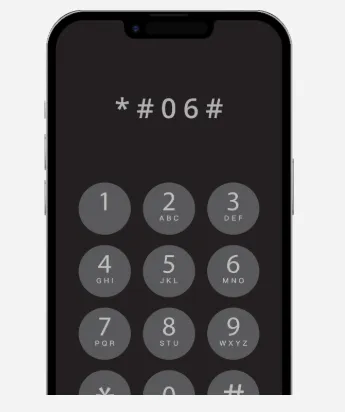
- Dial *#06# → If an EID number appears, your device supports eSIM
Step 2: Choose a Provider and Plan
-
Visit the website or download the app of your chosen provider (e.g., Airalo, Ubigi).
-
Select Japan as your destination.
-
Compare data allowances, validity periods, and prices. Read the reviews!
Step 3: Purchase and Install the eSIM
-
Create an account and complete the payment (using a credit/debit card).
-
You will receive a QR code by email or within the app.
-
To Install:
-
Connect to a Wi-Fi network.
-
On your phone, go to the cellular settings to "Add Cellular Plan."
-
Choose "Scan QR Code" and scan the code provided by your eSIM provider.
-
Follow the on-screen instructions to complete the installation.
-
Step 4: Activate and Connect in Japan
It's best to wait until you land in Japan to turn on your eSIM.
-
Go to Settings > Cellular (or Mobile Data).
-
Turn on the line for your new Japan eSIM.
-
Crucially, set your primary line to your "Home" number and set the "Default Voice Line" to your home number (if applicable). Then, set the "Cellular Data" to your Japan eSIM.
-
Turn off "Data Roaming" on your home line to avoid charges.
Buying and Activation Tips
-
Check Device Compatibility: Ensure your smartphone is eSIM compatible. Most recent flagship phones (iPhone 11/SE 2nd gen and newer, Samsung Galaxy S20 and newer, Google Pixel 3 and newer) support eSIM.
-
Purchase Before Arrival: Buy and set up your eSIM while you still have reliable internet access (e.g., at home or your departure airport).
-
Activation Timing:
-
Do not activate immediately: Install the eSIM profile (via QR code or manual input), but wait until you land in Japan to turn on the "Data Roaming" for that line.
-
Follow Provider Instructions: Some plans (like Holafly) start counting the validity period immediately upon installation, while others (like Airalo) start when they connect to the Japanese network. Read the provider's specific instructions carefully.
-
-
APN Settings: The eSIM configuration usually handles the Access Point Name (APN) automatically, but keep the provider's manual settings handy just in case.
-
Use Data Roaming: After arriving in Japan, navigate to your phone's Cellular/Mobile Data settings and select your new eSIM as the primary line for Mobile Data, ensuring Data Roaming is turned ON for the eSIM line.
Potential Drawbacks & Risks
-
Install before flying: It’s often easier to set up the eSIM while still on Wi-Fi before you land, so you're ready to go.
-
Check your phone is unlocked: Your device must support eSIM and be unlocked (SIM-free) to use these international eSIMs.
-
Check APN settings if no data: Sometimes you need to manually set the APN (provider should give instructions).
-
Beware “unlimited” fairness policies: Unlimited plans are great, but check whether there’s a fair-use daily cap, so high users (streaming, hotspot) are aware.
-
Top-up before you run out: If your trip is long, consider topping up data before you run out, to avoid losing connection.
-
Customer support varies: some providers have 24/7 chat, others slower response times.
The best eSIM depends on how long you stay, how much data you need, and whether you want unlimited or fixed data.Unlimited plans are very convenient but cost more; fixed-data plans are cheaper but need management.Set up your eSIM before travel, choose the right size, and monitor your usage — this will help you stay connected without surprises.
Enjoy your trip to Japan! With a travel eSIM, you'll have the peace of mind to navigate, translate, and share your experiences seamlessly.