Australia’s mobile market is no longer dominated by expensive long-term contracts. More and more travelers, students, digital nomads, and even local residents are switching to flexible prepaid eSIM options offered by smaller carriers. These providers often use the same major networks as Telstra, Optus, or Vodafone — but at a much lower monthly cost,no lock-in contracts, and simple online activation.The challenge is knowing which MVNO actually delivers good speeds, strong regional coverage, and enough data for streaming, navigation, and hotspot use.This guide explores the best low-cost Australian eSIM plans available this year, focusing on prepaid providers with high-data options under $30. I’ll also cover activation tips, network differences, compatibility requirements, and common mistakes to avoid before buying an eSIM in Australia.
What Is an Australia MVNO eSIM?
1. What is an MVNO?
MVNO stands for Mobile Virtual Network Operator.Building a nationwide cellular network is incredibly expensive. Instead of building their own towers,these MVNOs rent network space from Australia’s three actual network owners: Telstra, Optus, and Vodafone.
Because MVNOs don’t have to maintain thousands of physical towers or hundreds of retail stores, they pass the savings on to you. You get the exact same coverage and network quality as the big guys, but usually at a fraction of the price.
2. What is an eSIM?
An eSIM (embedded SIM) is a tiny, digital SIM chip built directly into your smartphone, tablet, or smartwatch during manufacturing.Instead of waiting for a piece of plastic to arrive in the mail or hunting down a paperclip to open your phone's SIM tray, you download your cellular profile over the internet.
You can buy a plan online, the provider emails you a QR code (or you use their app), you scan it, and your phone connects to the network instantly.
‼️ Putting it Together: Why Use an MVNO eSIM?
When you combine these two technologies, you get the ultimate modern mobile experience:
-
Instant Switching: You can swap to a cheaper phone plan in under 10 minutes from your couch.
-
Dual SIM Capability: You can keep your physical SIM card active (for your work number or home country number) and use an Aussie MVNO eSIM for cheap daily data.
-
No Contracts: Almost all MVNO eSIM plans are prepaid or month-to-month, meaning you can leave whenever a better deal comes along.
Main Australian Networks Coverage Comparison
When comparing the main Australian mobile networks, the landscape looks very different depending on whether you stay in major cities or travel into regional and rural areas.
Australia has three physical mobile network owners: Telstra, Optus, and Vodafone (TPG). Here is how their coverage, reach, and performance stack up.
1. Telstra: The Regional Heavyweight
Telstra is the undisputed king of geographic reach, covering over 3 million square kilometres of the Australian landmass.
-
The Strength: If you frequently drive between cities, visit regional towns, or work in remote areas, Telstra is often the only network that will keep you connected.
-
The MVNO Catch: If you buy a plan from a cheaper provider that uses Telstra (like Belong, ALDI Mobile, or Tangerine), you are usually on the Telstra Wholesale Network, which covers 98.8% of the population instead of 99.7%. This means you lose a tiny bit of coverage in deep bushland or very remote locations. (Note: Boost Mobile and JB Hi-Fi Mobile are exceptions and get full retail access).
2. Optus: The Metropolitan Speed King
Optus covers 98.5% of the population and has heavily focused on building a dense, incredibly fast 5G network in capital cities and major suburban hubs.
-
The Strength: According to independent testing by Opensignal, Optus frequently beats Telstra for average 5G download speeds. If you live, work, and play in a major city or large regional center, Optus often provides the best balance of speed and price.
-
The MVNO Catch: None. Optus gives its MVNOs (like Amaysim, Yomojo, and Moose Mobile) access to its full network.
3. Vodafone (TPG): The Budget City Specialist
Historically, Vodafone struggled with coverage outside of major cities. However, a major regional network-sharing agreement with Optus has significantly closed the gap, boosting Vodafone’s population coverage to a competitive 98.5%.
-
The Strength: Thanks to the Optus partnership, Vodafone users now tap into Optus towers in many regional and remote areas. Combined with the fact that Vodafone-backed MVNOs (like TPG, Felix, and Kogan) offer the cheapest high-data plans on the market, it represents excellent value for city dwellers who occasionally travel.
-
The MVNO Catch: None. Vodafone MVNOs get full network access, though some cheaper tiers may have speed caps (e.g., limited to 150Mbps).
⁉️ How to Choose Your Network?
-
The "City Slicker": If you rarely leave capital cities or large metro hubs, Vodafone or Optus will save you a lot of money without any noticeable drop in service.
-
The "Road Tripper": If you like camping, driving interstate, or exploring national parks, stick to Optus or a Telstra MVNO.
-
The "Outback Explorer": If you live in a rural area or regularly go off-grid, you need a direct Telstra Retail plan or Boost Mobile to ensure you get every last drop of regional coverage.
Top eSIM High-Data Picks (Under $40)
|
Provider |
Data Allowance |
Network |
Monthly Cost |
Key Highlight |
|
50GB (150Mbps cap) |
Vodafone |
$30 ($15/mo first 3 mos) |
Best sustainability (Plants a tree/mo) |
|
|
400GB (Promo) |
Optus |
$35 |
Massive intro data; 200Mbps 5G cap |
|
|
100GB (4G/5G) |
Vodafone |
$22.50 for first 6 mos,then $40 / mth |
Longest discount duration (6 months) |
|
|
80GB |
Telstra |
$39 |
Full Telstra 5G network coverage |
|
|
105GB (Promo) |
Optus |
$29.90 ($34.90 ongoing) |
High 4G data for heavy users |
|
|
120GB |
Vodafone |
$20 for the first 6 months |
Great for bargain hunters and travellers |
1. felix mobile – The Sustainable Choice
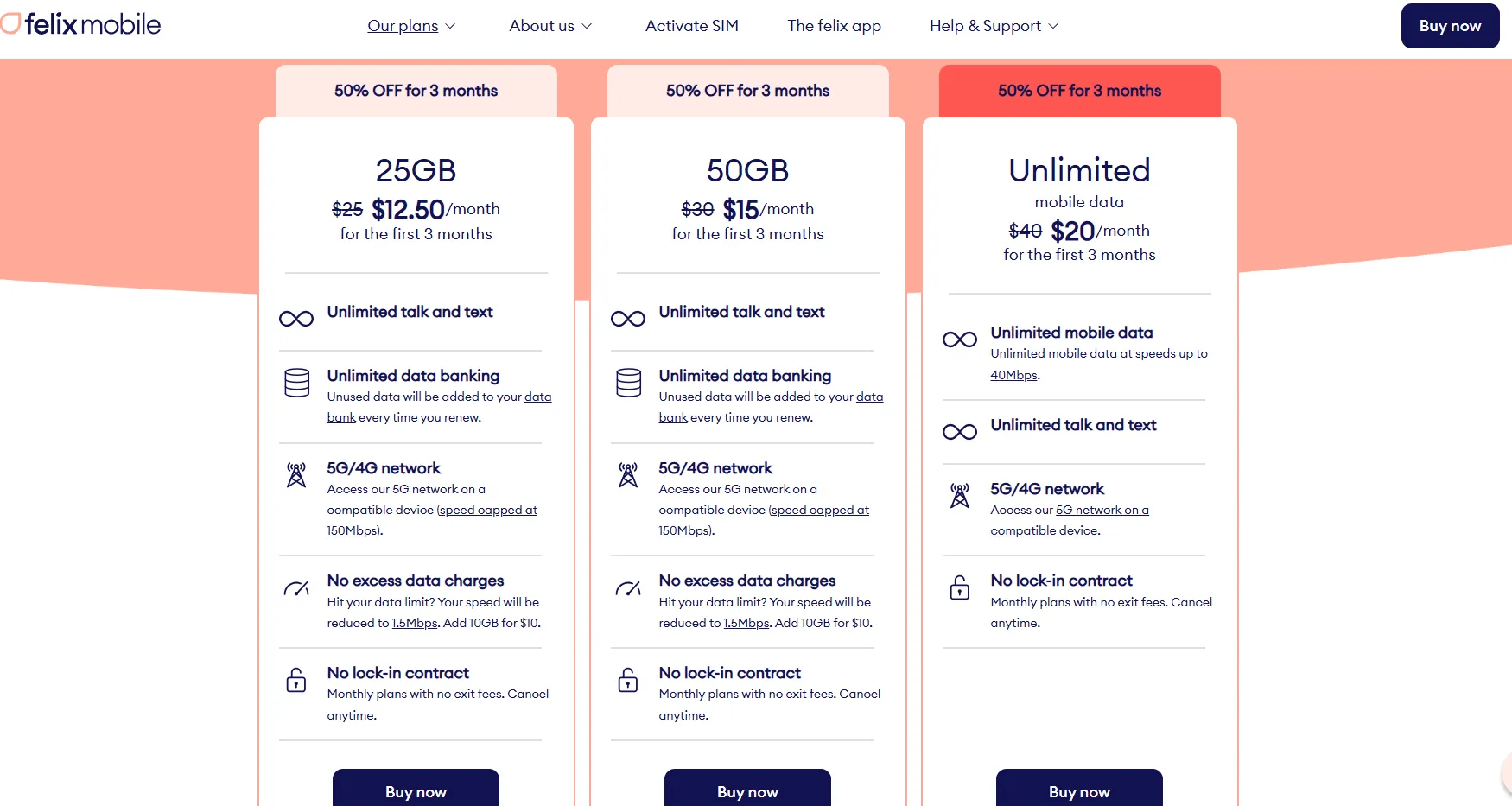
felix is an eco-conscious MVNO powered by TPG Telecom on the Vodafone 4G/5G network. In 2026, felix offers three no-lock-in plans, all available with eSIM at no extra cost.Every plan includes unlimited national calls and texts. Unused data rolls over to the next month (data banking). And as a certified carbon-neutral operator, felix plants one tree for every month you stay on a plan.
-
Data: 50GB at speeds up to 150Mbps.If you exhaust your data, they provide "limitless" data at 1.5Mbps, which is enough for music and basic browsing.
-
Network: Vodafone 4G/5G. Coverage is strongest in metro areas. Check the coverage map before committing if you live regionally.
-
eSIM activation: Download the felix app (App Store or Google Play), sign up, select eSIM as your SIM type, and activate within minutes.
2. Amaysim – The Data King
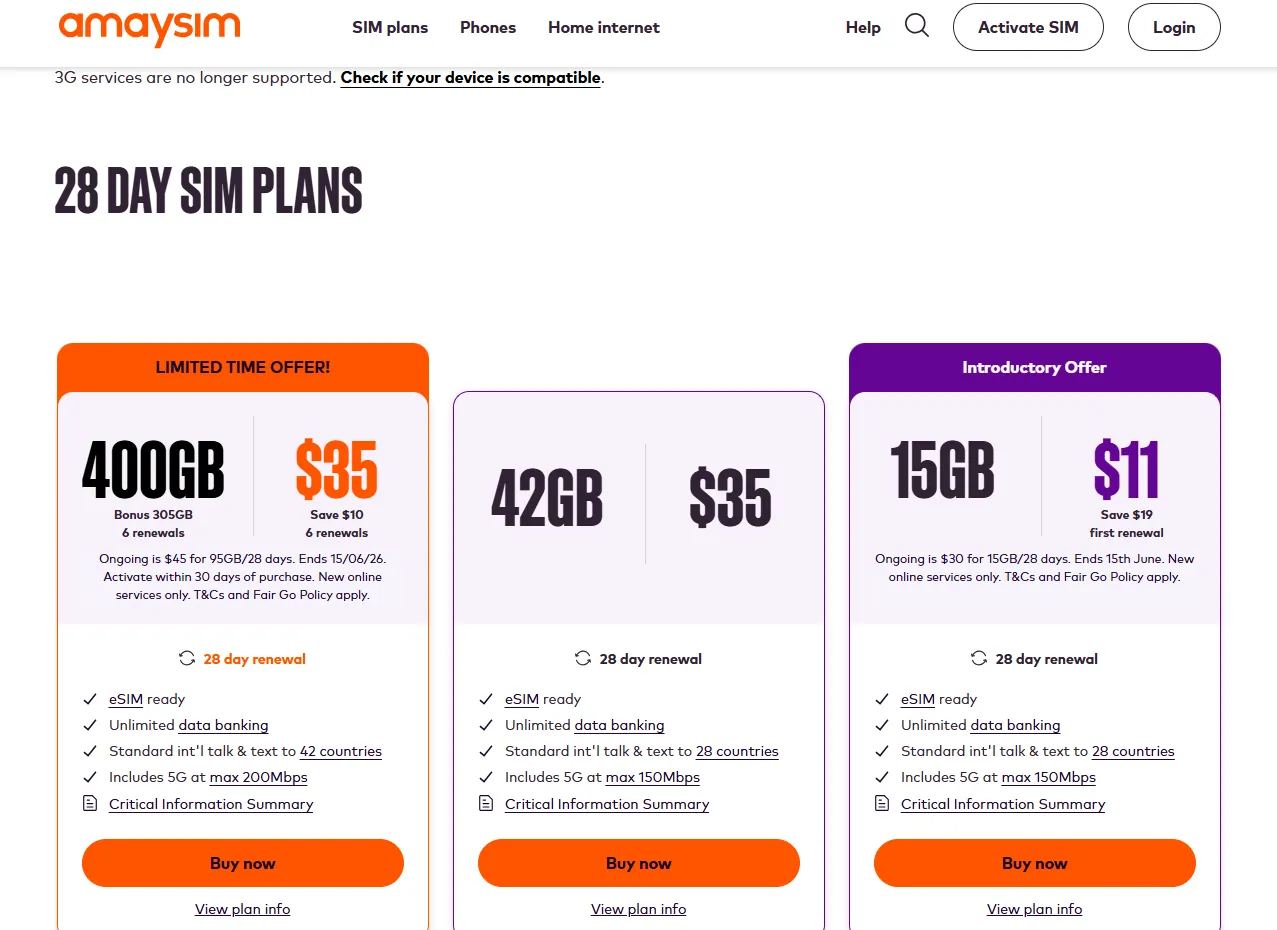
Amaysim operates on the Optus network and has long been a favourite among price-conscious Australians who still want good coverage. All plans support eSIM.They often offers "Double Data" or massive 400GB bonuses for the first 3–6 months. Data banking is included across most plans—unused data rolls to your next recharge. International talk and text to 28–42 countries are included on select plans.
-
Data: 400GB.
-
Network: Optus 4G/5G—strong in cities and many regional centres.
-
eSIM activation: Sign up online, select eSIM during checkout, scan your QR code, and follow the prompts in the amaysim app.
3. TPG – The Reliable All-Rounders
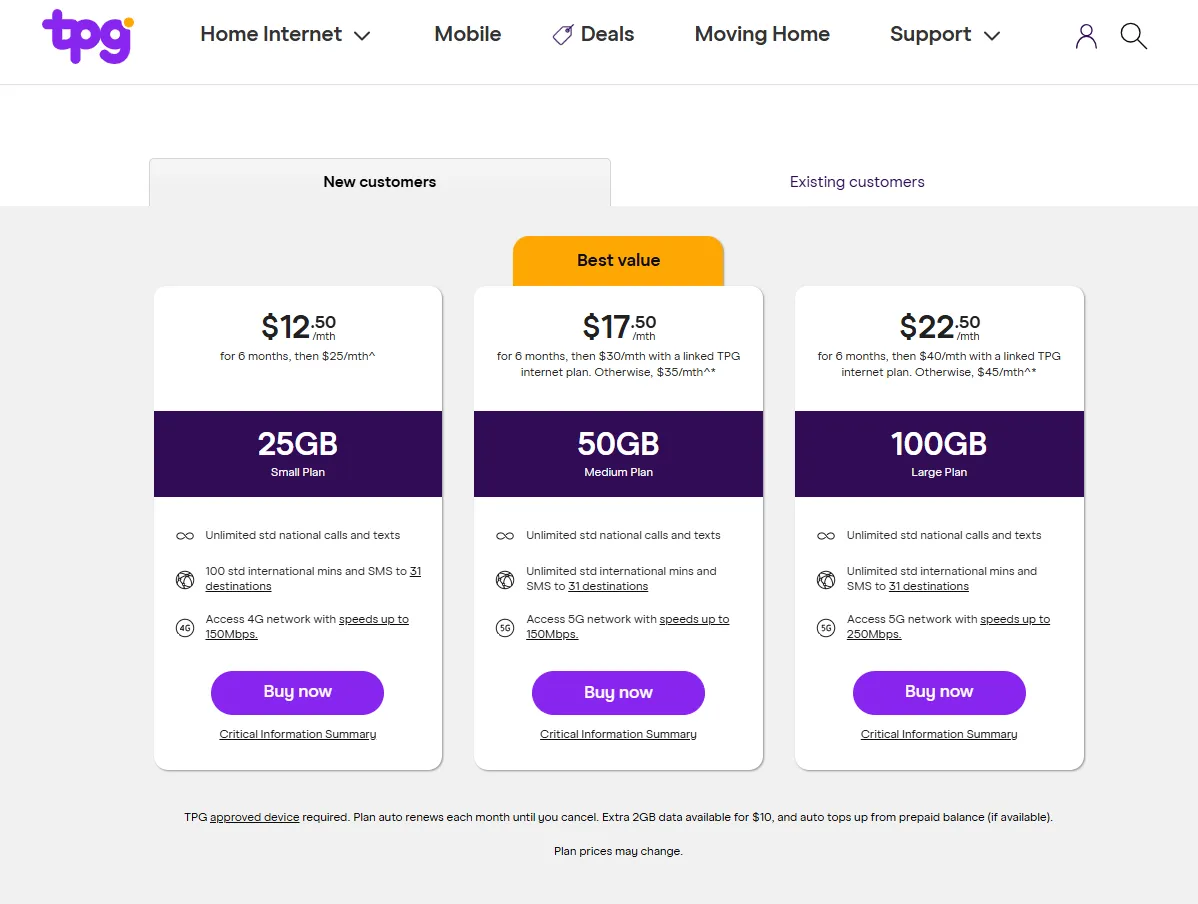
TPG Mobile offers eSIM support on all of its month-to-month plans. Because TPG operates on the Vodafone network (which now shares towers with Optus in regional areas), it delivers fantastic coverage and aggressive pricing, making it one of the most popular value picks in Australia. Their 6-month half-price intro period is the longest in the market, making them the best choice for those who don't want to switch providers every few weeks.
-
Data: 100GB (speeds up to 250Mbps).
-
Network: Vodafone 4G/5G
-
eSIM activation: Head to the TPG Mobile website and select your plan.Selecting eSIM during checkout, scan your QR code, and follow the on-screen prompts to add the cellular profile, and you're good to go.
4. Boost Mobile – The Coverage Leader
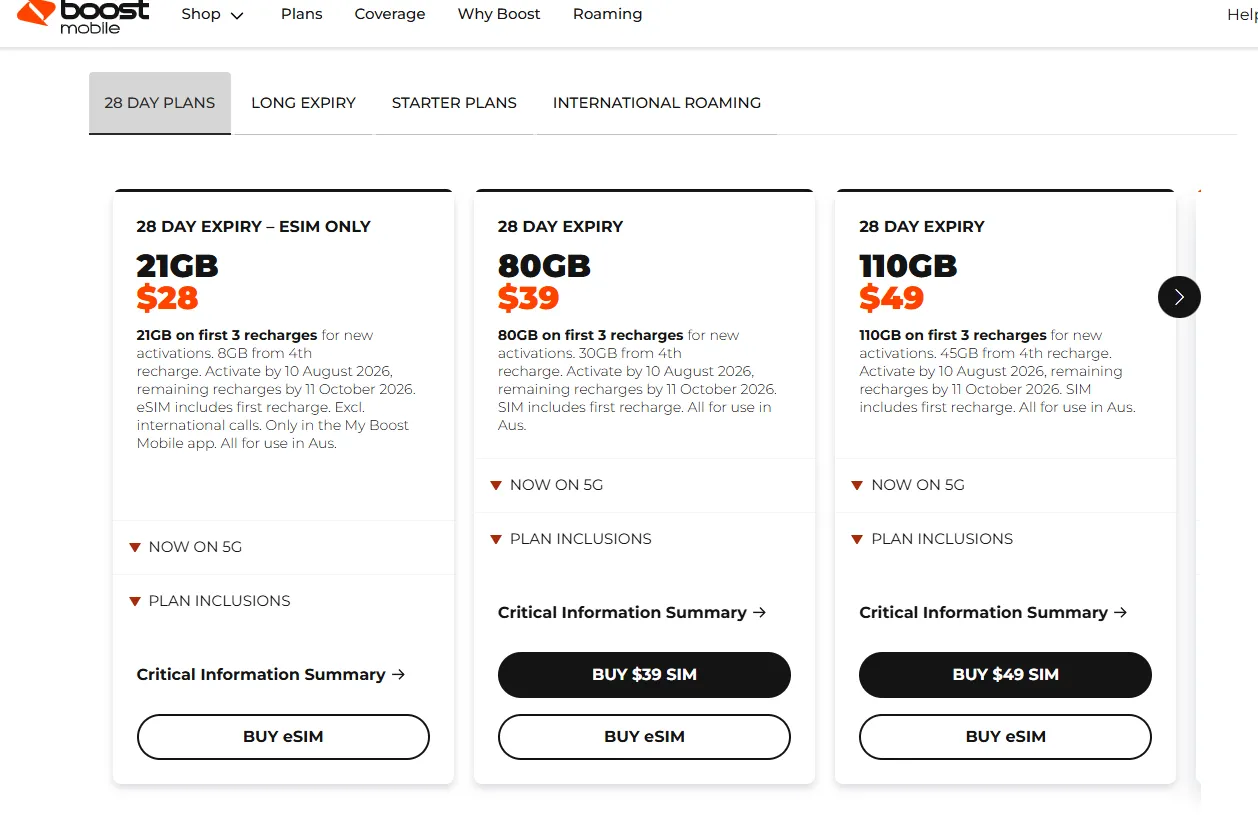
Boost Mobile is unique: it's the only MVNO that uses the full Telstra Prepaid Mobile network (not the wholesale version), covering 99.7% of Australia's population and 3 million square kilometres.If you live, work or travel in regional or rural Australia, Boost's Telstra coverage is unparalleled among MVNOs at this price. Data rollover is included if you recharge before expiry. 5G access is available with compatible devices in metro and many regional areas.
-
Data: 110GB - 80GB data on first 3 recharges (30GB from 4th recharge onwards).
-
Network: Full Telstra Prepaid Mobile 4G/5G (not wholesale). This is the real deal.
-
eSIM activation: eSIM only—available through the My Boost Mobile app (App Store or Google Play).
5. Yomojo – The Support & Family Specialist
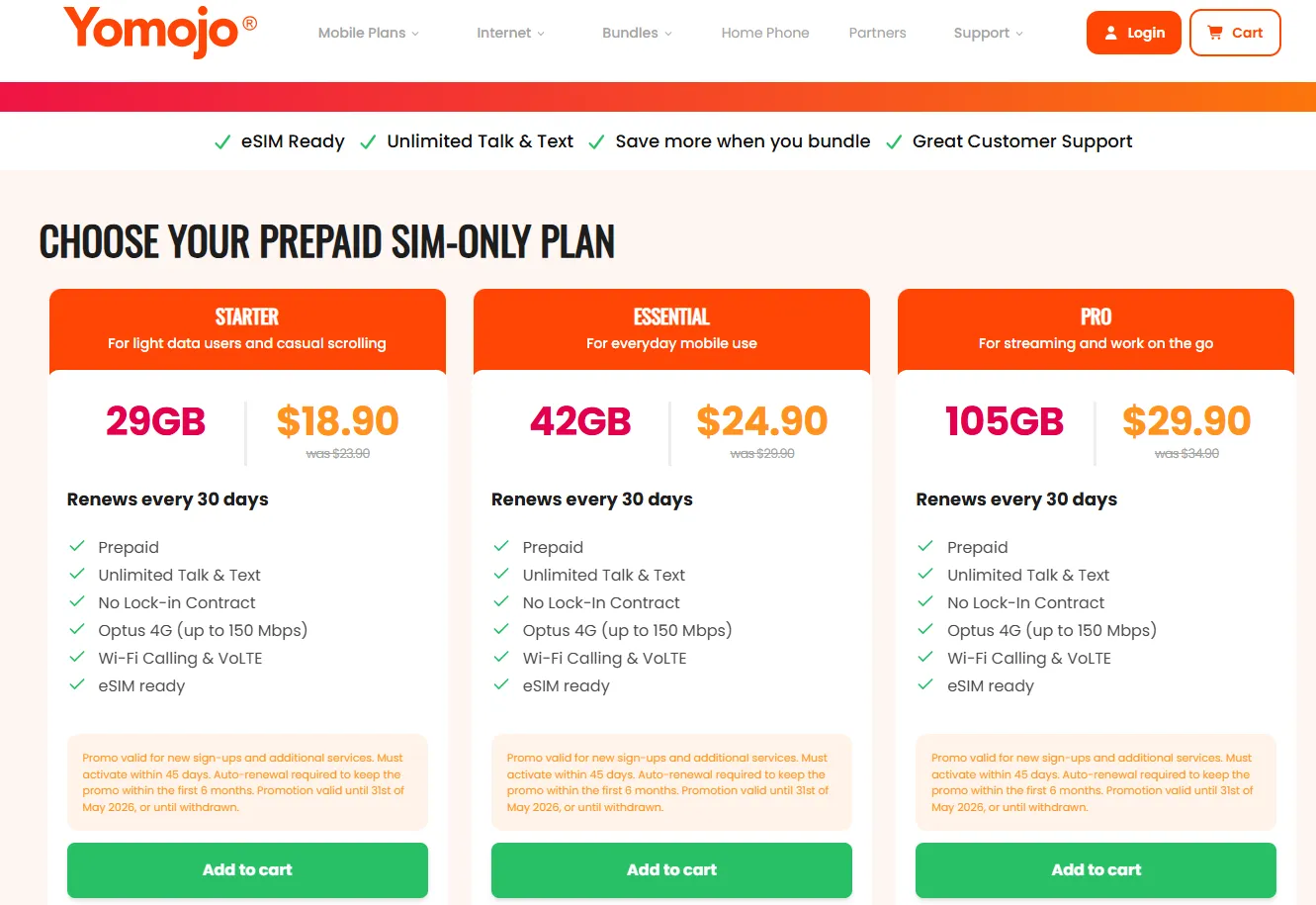
In 2026, Yomojo has carved a niche by pairing massive data promos with the highest-rated customer service in the MVNO space.Unique to Yomojo, you can bundle up to six eSIMs on one account and receive up to 15% off the total bill.
-
Data: 105GB with a typical 150Mbps cap.
-
Network: Optus 4G.
-
eSIM activation: Head to the Yomojo website and choose your prepaid plan.Selecting eSIM during checkout, scan your QR code, and follow the on-screen prompts to add the cellular profile, and you're good to go.
6. Kogan Mobile – Bargain Starter with 365-Day Options
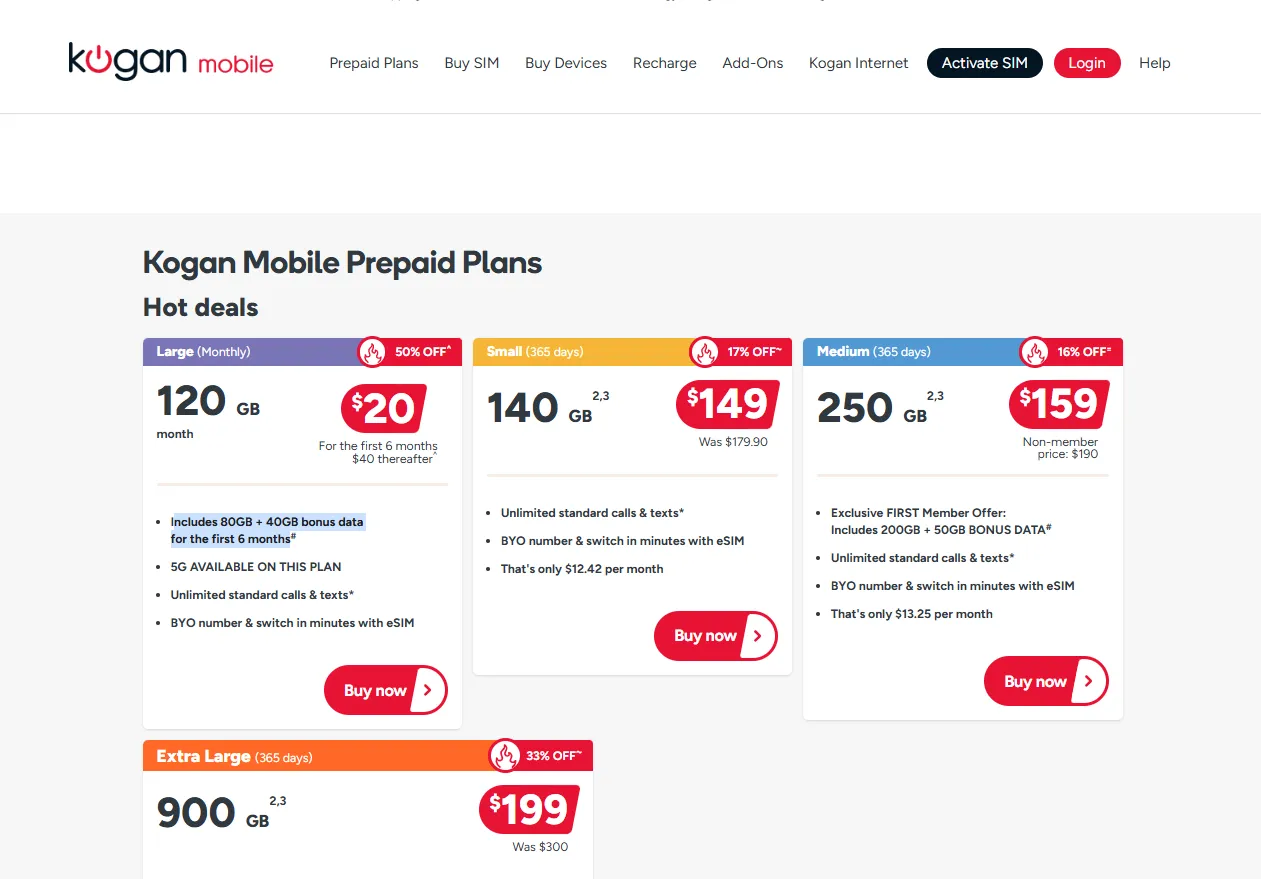
Kogan Mobile uses the Vodafone network and offers instant eSIM activation—get connected in about 15 minutes. Plans are prepaid with no contracts.The 365-day prepaid plans (small/medium/large/extra large) offer exceptional value if you're willing to pay upfront for a full year. For month-to-month users, the Small Monthly Plan remains one of the most affordable entry points with eSIM.
-
Data: 120GB (includes 80GB + 40GB bonus data for the first 6 months)
-
Network: Vodafone 4G/5G (5G on Large Monthly plan only).
-
eSIM activation: Purchase a prepaid voucher, then activate with eSIM at the Kogan Mobile activation site.
Tips Before Buying - Avoid These Common Mistakes
1. Confusing “28 Days” With Monthly Billing
Many Australian prepaid plans renew every 28 days, meaning:
- 13 billing cycles per year
2. Ignoring Coverage Maps
Cheap Vodafone plans may struggle in remote Australia.
3. Missing Introductory Pricing
Many plans increase after:
-
3 months
-
6 months
4. Buying Before Checking Device Lock Status
Your phone must be unlocked for Australian eSIMs.
Frequently Asked Questions
Q: Can I keep my existing phone number?
A: Yes. Every MVNO listed supports number porting. You'll need your current provider's account details and an active service to receive the port confirmation SMS.
Q: Are these plans truly "no contract"?
A: Yes. All plans covered are prepaid or month-to-month postpaid without lock-in contracts. You can cancel at any time. Some promotional pricing requires staying for a certain period to keep the discount, but there are no break fees.
Q: Can I use an eSIM plan with my existing physical SIM simultaneously?
A: Most modern eSIM-compatible phones support dual SIM—one physical SIM plus one eSIM (or sometimes two eSIMs) active at the same time. This is perfect for keeping your existing number while trying a new data plan on a second line.
Q: What about international roaming?
A: Most budget MVNOs have limited roaming options. felix offers a $20 roaming add-on with 4GB data and 100 minutes in 40+ countries. For frequent international travellers, consider keeping a travel eSIM (like Airalo, Holafly, or Yesim) as a secondary data SIM while roaming.
Q: How do I check if my phone supports eSIM?
A: Most major smartphones released after 2018 support eSIM technology.
-
The Quick Check: Dial *#06# into your phone's keypad. If you see an EID number (a 32-digit code) pop up on your screen, your phone has an embedded eSIM chip.
-
Via Settings: On iPhones, look for "Add eSIM" under Settings > Mobile. On Android, check Settings > Connections > SIM Manager for a similar option.
Q: Can I use an Australian MVNO eSIM in a phone bought overseas?
A: Usually, yes, but there are exceptions. Most international devices work flawlessly. However, smartphones manufactured specifically for mainland China, Hong Kong, or Macao (especially certain iPhone models) often have the physical dual-SIM hardware tray instead of an internal digital eSIM chip. If you bought your phone in North America, Europe, or most parts of Asia, it should work fine—just ensure the device is network unlocked.
Q: Can I have multiple eSIMs on one phone?
A: Yes. Most modern smartphones allow you to store multiple eSIM profiles simultaneously (e.g., a home SIM, a work SIM, and a travel SIM). However, depending on your device model, you can generally only have one or two profiles actively turned on and receiving signal at the exact same time.